
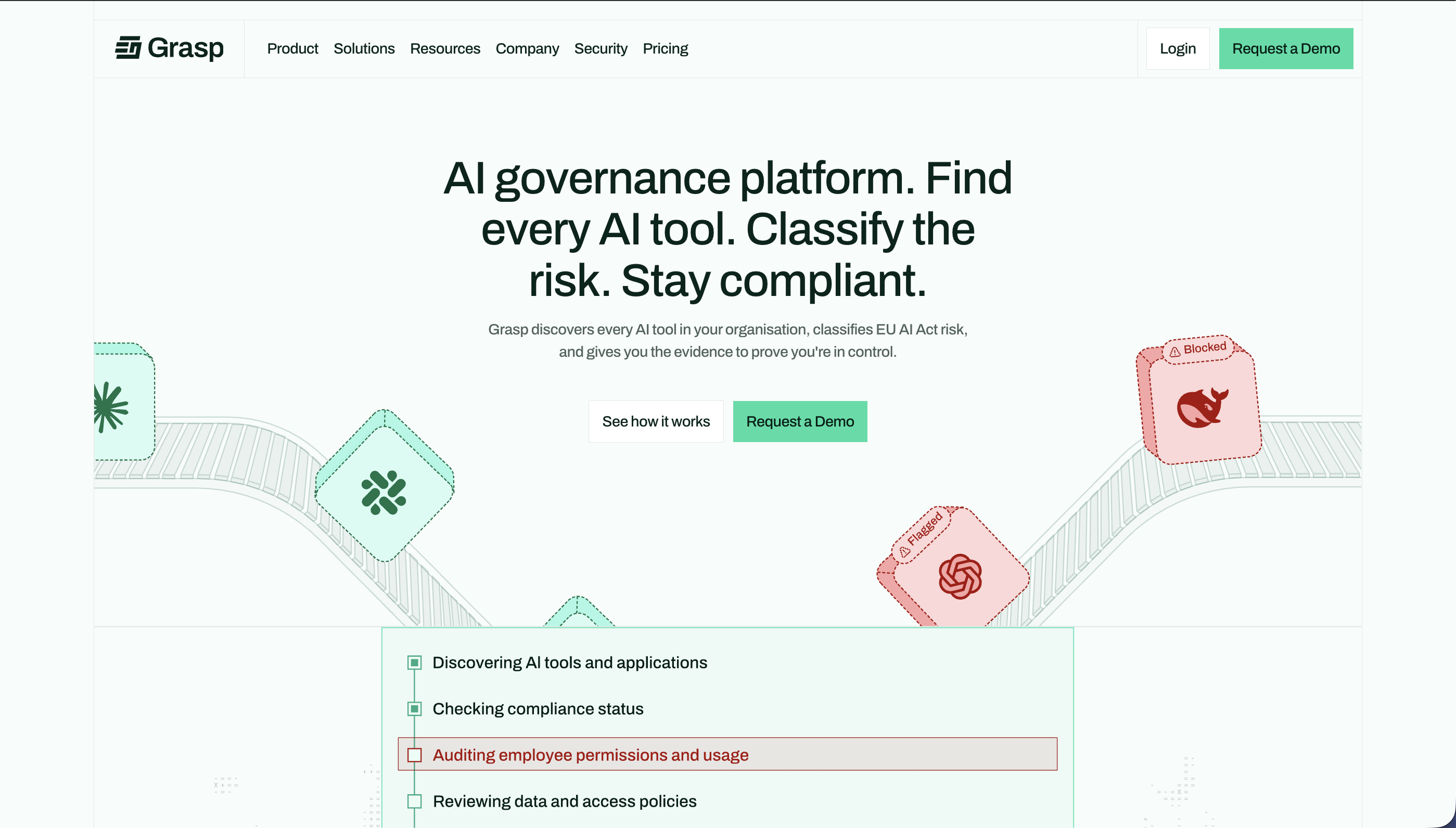
GRASP helps organisations get ahead of the EU AI Act and put real AI governance in place. This was a different kind of SEO project: not optimising an established page, but winning a category while it is still forming — capturing rising EU AI Act demand and turning it into qualified pipeline through conversion-first SEO, GEO and a tightly focused Google Search campaign.
The EU AI Act is creating a brand-new buying need, but the market language is still moving. Buyers search around "EU AI Act compliance" and "AI governance" without agreed terminology, awareness of any single vendor is low, and the people doing the searching are technical and legal specialists who don't convert on hype. The job: own the high-intent queries early, and turn specialist visitors into demo requests before competitors define the space.
GRASP is an AI governance and EU AI Act compliance platform that helps organisations understand their obligations, assess risk and stay compliant as enforcement ramps up.
I treated organic and paid as one system aimed at the same high-intent demand, with a third layer most competitors ignore: AI search. Conversion-first SEO builds durable visibility, a focused Google Search campaign captures demand today, and GEO work positions GRASP to be the answer AI assistants cite when someone asks how to comply with the EU AI Act.
A clean technical and measurement foundation first: crawlable structure, fast pages, and conversion tracking wired up so every channel could be judged on qualified demo requests, not vanity traffic.
I mapped the category from informational to commercial intent and built content that earns authority on the questions buyers actually ask — from what the EU AI Act means through to how to comply with it. To keep that content sharp and consistent, I set the editorial system and writing standards the whole site is held to, so every page reads like a credible answer rather than filler.
In a category this new, a growing share of research happens inside AI assistants. I structured GRASP's content and entities to be surfaced and cited by AI search — clear definitions, answer-first formatting and structured data — turning the EU AI Act's novelty into an advantage instead of a tracking blind spot.
One tightly themed Search campaign, split into two ad groups — EU AI Act Compliance and AI Governance — so paid worked the same high-intent terms as organic from the other side. Tight theming keeps relevance high and wasted spend low while the organic footprint matures.
Visibility only counts if specialist buyers act. I focused the messaging and funnel on positioning GRASP as the clear, credible answer in the category — substance over slogans — and on guiding technical and legal visitors toward a demo.
As EU AI Act enforcement ramps up, demand will only grow. The next phase is scaling the content programme and deepening GEO/AI-search visibility, so GRASP compounds its head start and stays the default answer as the category matures.
Building visibility in a category that barely exists yet? Reach out at mo@sahardid.com.